Organise your own hackAIR workshop with the hackAIR workshop toolkit

Are you interested in organising a workshop on air pollution and grassroots air quality monitoring –  for your neighbourhood, school, organisation, city council?

Check out the hackAIR workshop toolkit: it is easy to use! And, of course, you can tailor the content to your needs.

In this toolkit, the hackAIR team walks you through the whole process of planning and organising your own hackAIR workshops. All resources are compiled for you – ready to go.

Four modules are available:


The toolkit supports you before, during and after a hackAIR workshop.

Before:

During (for each of the four modules):

  • Facilitation guide
  • Presentation slides 
  • Handouts

After:

The workshop modules can be used separately. They can also build on each other, depending on purpose and context. Several teachers have already told us that they are thrilled to bring hackAIR workshops to their classrooms!

Let’s talk. We’d love to hear from you how you are using the hackAIR workshop toolkit!

For support with workshop facilitation or if you would like to invite hackAIR to present at your event: please get in touch with us. We’ll explore together what is possible.

For Norway-based blog readers: you are invited to participate in a workshop organised by hackAIR partner NILU in Oslo on Thursday, March 1. Information about this event is here.

And of course: please send us information about your upcoming events. We will spread the word through our communication channels!

Local air quality campaigns: Learning from UrbanAirQ

Air pollution is most importantly a local issue. Have you been wondering how to engage your neighbours, how to collect data together and to make sense of the results? UrbanAirQ is an inspiring example for a citizen-driven local air quality campaign.

 One of the Dutch pilots of the Making Sense project  – UrbanAirQ – involved the local community of the two most polluted streets in Amsterdam. Through online and offline recruiting, a group of 25 local residents and a number of experts participated in the case study.  


The main questions at the start were: How can we bring together engaged citizens and experts to explore the opportunities of participatory air quality monitoring? Can this collaboration identify challenges and issues to be tackled? Will this project improve the quality of life of these local residents?

The local residents were in charge: they decided what they wanted to measure and why. Their questions varied: some wanted to know more about differences from street to street and from door-to-door; others were interested in the  different levels of air pollution between the ground floor and the sixth floor of the same building.


Participants received an air quality sensor that could generate data to answer these questions and placed them in the best locations to address their questions.

The sensors were calibrated with the help of technical experts, using the official measuring stations. Data generated during the three-months-pilot were analysed with the support of experts from the Dutch national weather service (KNMI).


One participant placed two sensors: one on the front side of her house, one in the backyard. She was very interested to learn more about the level of air pollution in these two locations because she wanted to choose where she would spend her free time outside. With the data and new information from the experiment, she was able to make an informed choice about where to go. With the data from the sensors, citizens could find the information they were interested in and change their behaviour to take better care of their health and well-being.

The project inspired a start-up, called Treewifi. Air quality sensors are placed into birdhouses and hung into trees in cities. If the air is clean, free WiFi is offered to passers-by. Data is hyper-local, high-quality and real-time.

Expect to be surprised by what a community-led citizen science project can bring as short and long-term outcomes!


Partners in this project were the Dutch national weather service (KNMI), University of Wageningen, Public Health Service of Amsterdam (GGD Amsterdam), Dutch Energy Research Center (ECN), LongFonds, Waag Society and Amsterdam Institute for Advanced Metropolitan Studies (AMS).

If you want to set up a local air quality campaign, you can find instructions to build your own hackAIR sensors at our tutorial page – and check out the Making Sense toolkit for lots of methods, tools and practices. Very inspiring resources for hackAIR users who want to design and implement air quality measurement campaigns in their local communities!

Build your own sensor case

After you’ve build your hackAIR sensor, you’ll need a case to protect it from the elements. You can use one of the options below, or come up with your own design. The sky is the limit!

When you pick a case, pay attention to the guidelines below to ensure proper functioning of the sensor.

Material

  • Weatherproof & water resistant
  • Check out sustainable and recyclable options
  • No metal (could disturb WiFi or Bluetooth connectivity)

Size

  • Electronic parts: length 10 cm, height 6 cm, width 5.5 cm
  • All pieces need to fit inside the case
  • The sensor should be placed a few centimeters below the electronic parts

Colour

  • Should not get warm / overheated when exposed to sun
  • Light colours (white, transparent) preferred

Ventilation

  • Make sure that warmth is not trapped inside the case: ventilation is crucial
  • Inlet and outlet need to have free air flow

Position

  • Outside use only, ideally shaded
  • Not directly next to sources that produce / disseminate particulate matter (such as chimneys)
  • Height: best between 1.5 m and 4 m (same as official sensors)

Options for cases

  • Plumbing pipe
  • PET bottle
  • Yoghurt bucket
  • 3D printed case

Plumbing pipe

These are the pipes that the German air quality network luftdaten.info uses for their sensors


See how it works: in this video tutorial.


PET bottle

This is an easy, quick and sustainable way to build your sensor case – upcycling a PET bottle!

Hester Volten, scientist air quality at the National Institute of Public Health and the Environment (RIVM) in the Netherlands and member of hackAIR advisory board, shows in this video how a PET bottle can be used as sensor case. 

hackAIR consortium partner BUND created a tutorial for building your own sensor case from a PET bottle.

Yoghurt bucket 

hackAIR team member Wiebke Herding (ON:SUBJECT) shows her current sensor setup (using three sensors: hackAIR home v2, luftdaten and RIVM). She writes:

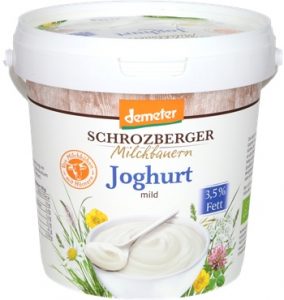
 “The RIVM sensor and the luftdaten sensor use the same casing: a yoghurt container (1000 g, available in supermarkets). I simply cut a large hole into the bottom (see inset). The lid makes it easy to insert the electronics. The bucket strap is perfect for hanging!

It’s waterproof with plenty of ventilation, mostly white and allows the sensor to be parallel to the ground (the intake slot is not supposed to face downwards).”


This video tutorial shows you how to build your sensor case from a yoghurt bucket (as shown on the right).

Let us know whether you can find these buckets in your country! We know they are available in Germany, the Netherlands, Belgium, Austria, Switzerland. Where else?


3D print


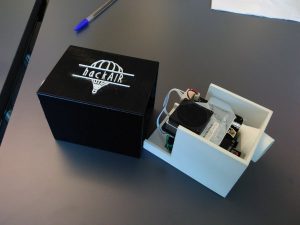
The Norwegian hackAIR consortium partner NILU (Norwegian Institute for Air Research) printed a 3D case for the sensor.

In the Maker Community, you will find many ideas and suggestions for 3D printing for cases and mounts. Have a look at Thingiverse!


Send us pictures of  YOUR sensor cases

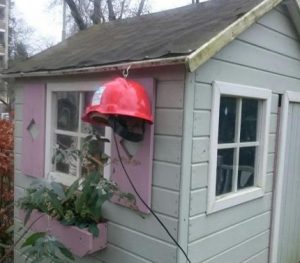
We are very curious to see your creative ideas for sensor cases.

Here are resources for inspiration.

We will share your pictures with the hackAIR community!

Press release – Open platform hackAIR maps current air quality in Europe’s cities

Open platform hackAIR maps current air quality in Europe’s cities – powered by citizens and smart technology

Citizens can use the app and low-cost sensors to generate their own measurements of air quality to enrich official data, and find out how to avoid and reduce particulate matter pollution

Press release – 8 February 2018

Today, hackAIR launches its apps for iOS and Android, connected to an online platform at www.hackair.eu, where citizens in Europe can check the air quality in their neighbourhood. In turn, everyone can improve the data from official sources with their own measurements, for instance by simply uploading a photo of the sky with their smartphone.

With air pollution being the number one environmental concern of European citizens and the number one environmental cause of illness and death in urban centres, hackAIR provides actionable information on the most important type of air pollution: particulate matter pollution. Particulate matter pollution is a complex mixture of extremely small particles in the air, which are easily inhaled.

Around 90% of Europeans living in cities are exposed to levels of air pollution deemed damaging to human health. Whilst the damaging impacts of particulate matter pollution are widely recognised, official air quality data show significant gaps and are often difficult to access.

The hackAIR platform aims to make that data readily available and improve the official datasets by combining them with measurements from users. They can take photos of the sky, use a piece of cardboard with petroleum jelly, or build their own microcomputer sensor in an afternoon.

Many Europeans rightly worry about air quality: how clean is the air I breathe, when I live near a major road, airport or industrial zone? The hackAIR platform gives them the answer, and helps them to contribute their own measurements to make that answer better, more relevant and actionable,” says Evangelos Kosmidis, Physicist and Founder of DRAXIS.

The hackAIR service is location-based and real-time, offering users a map-based interface to the data available on the air quality in their neighbourhood. With that information, they can find areas with clean air for relaxation and sports, and which areas to avoid because of high pollution levels. Citizens with concerns over air pollution can also use the platform to get better informed and involved in the discourse to improve air quality, locally and on a larger scale.

hackAIR offers four ways for users to contribute their own air quality data:

  1. They can submit photos of the sky using the hackAIR app. An algorithm gives a rough estimate of air pollution levels.
  2. They can build a simple cardboard sensor that uses the discoloration of petroleum jelly to get an estimate of the amount of particulate matter pollution.
  3. hackAIR provides manuals and workshops to build stationary and portable microcomputer air quality sensors. These sensors are cheap, easy-to-build and provide high-quality data.
  4. Experienced users can submit and access data using an online application programme interface (API).

In the coming year, hackAIR is organising a series of workshops in the pilot countries Germany, Norway, Greece and Belgium to raise awareness and train people on air quality, how to build sensors, and how to use the resulting information.

Air pollution is the environmental issue that Europeans worry about the most. But they do not feel sufficiently informed about the issues, and its impact on their health in their country. With the app, the workshops and the sensors, hackAIR aims to empower them to make better decisions based on better information,” says Arne Fellermann, BUND/Friends of the Earth Germany.

The app and platform

The app can be downloaded for iOs and Android from www.hackair.eu.

The platform is accessible at platform.hackair.eu.

About hackAIR

hackAIR is a collaboration of six European organisations working on air pollution,  environment, technology, citizen science and research.

The partners are DRAXIS (Greece), NILU (Norway), CERTH (Greece), BUND (Germany), Vrije Universiteit Brussel (Belgium) and ON:SUBJECT (the Netherlands). The Democritus University of Thrace, the Technological Educational Institute of Athens and CREVIS contribute as third parties affiliated to DRAXIS Environmental S.A.

hackAIR is supported by the Horizon 2020 programme on ‘Collective Awareness Platforms for Sustainability and Social Innovation’ of the European Union under grant agreement number 688363.

More information

Panagiota Syropoulou, project leader: syropoulou.p@draxis.gr, +30 697 900 35 12
In Germany: Arne Fellermann – Bund für Umwelt und Naturschutz Deutschland: Arne.Fellermann@bund.net, +49 176 810 366 72
In Norway: Hai-Yung Liu – Norwegian Institute for Air Research: hyl@nilu.no, +47 638 980 48; Sonja Grossberndt – Norwegian Institute for Air Research: sg@nilu.no, +47 63898245
In Belgium: Carina Veeckman – Vrije Universiteit Brussel: carina.veeckman@imec.be, +32 2 629 16 65
In the Netherlands: Wiebke Herding – ON:SUBJECT: wiebke@onsubject.eu, +31 61 55 073 66
In Greece: Panagiota Syropoulou –  DRAXIS Environmental S.A.: syropoulou.p@draxis.gr, +30 697 900 35 12
Copyright 2021. All rights reserved

Take part in this short survey and help us improve your hackAIR experience.